
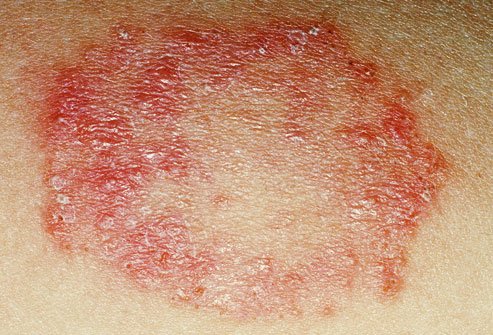
Fungal infections :
Commonly seen fungal infections of skin are Tinea(ring worm) and Candidiasis. They are superficial infections typically involving the skin, hair, and nails. The classic appearance of a tinea infection is a central clearing surrounded by an active border of redness and scaling, which gives rise to the more common name, ringworm. The most common mode of transmission of ring worm is by direct contact with other infected people, but transmission also occurs via contact with animals, the soil, and fomites. Fungal infections are also more likely to occur with prolonged exposure to moisture as in residence in warm, humid climates, contact with sweaty clothes or bedding, obesity, poor personal hygiene.
Candida is a part of normal body flora, but when the balance of flora is disturbed, infection may occur. Risk factors include antibiotics, corticosteroids, diabetes, obesity, immunosuppression and immunodeficiency
Treatment :
Topical and systemic antifungals
Lasers